Performed by Dr. Ravi Chandra Reddy Obili at Dr Ravi Chandra Reddy
Laparoscopic appendicectomy is a keyhole surgery to remove the appendix when it becomes inflamed or infected, a condition called appendicitis. The procedure uses small incisions and a camera to guide the removal, which typically results in less pain and faster recovery than traditional open surgery. Dr Ravi Chandra Reddy performs this procedure for patients experiencing acute appendicitis.
We believe in honest, upfront disclosure so you can make an informed decision.
A step-by-step look at what happens during this procedure.
You receive general anaesthesia so you are asleep and feel no pain during the procedure.
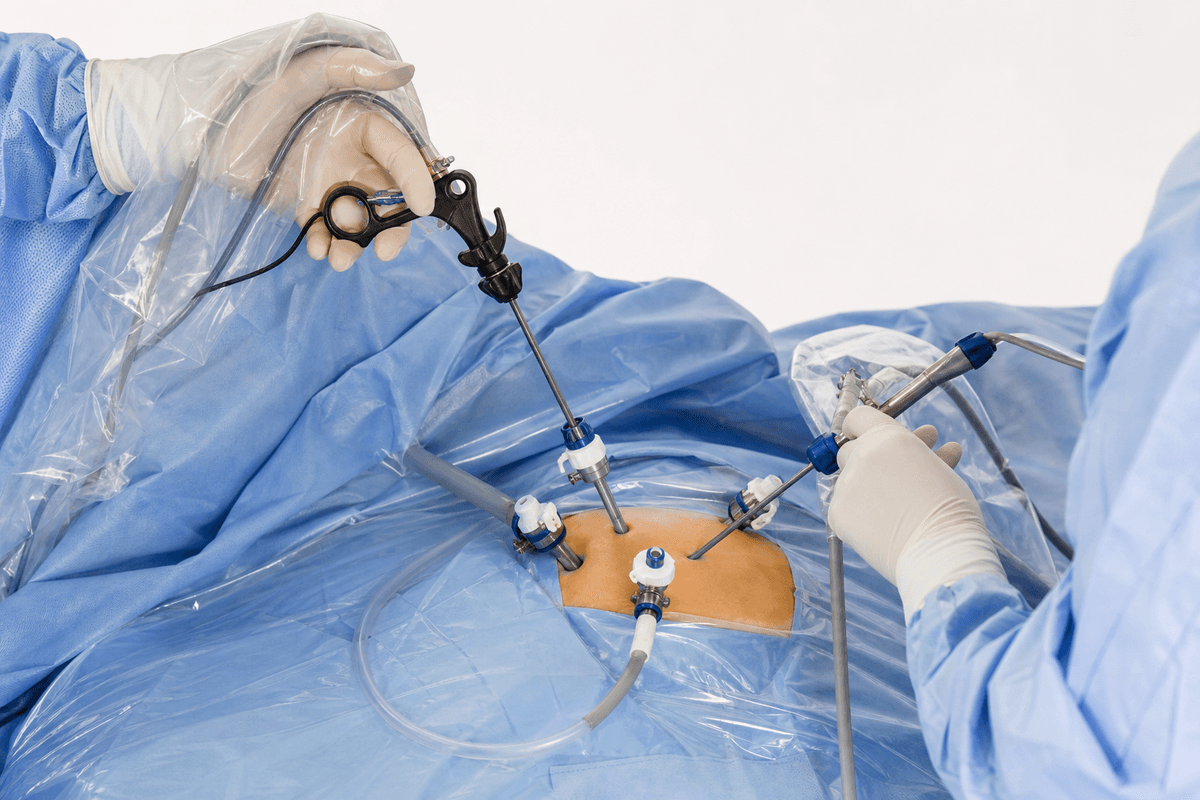
Three or four small cuts, each about half to one centimetre long, are made in your abdomen.
A thin tube with a camera (laparoscope) is inserted through one incision to view the appendix and surrounding organs on a monitor.
Special instruments are passed through the other incisions to carefully detach and remove the inflamed appendix.
The incisions are closed with stitches or surgical glue, and dressings are applied.
A structured, patient-first approach from first consultation to full recovery.
Dr Ravi Chandra Reddy reviews your symptoms, examination findings, and imaging to confirm appendicitis and plan the safest surgical approach.
The procedure is performed using laparoscopic instruments with careful visualisation to minimise tissue trauma and reduce post-operative pain.
If complications such as rupture or abscess are found, the approach may be adjusted to ensure complete removal and thorough cleaning of the abdomen.
After surgery, pain relief, wound care, and diet progression are managed, with clear instructions provided before discharge.
What to expect at each stage of your recovery journey.
You may experience tiredness, mild pain at incision sites, and shoulder discomfort from surgical gas. Pain relief is provided, and gentle movement is encouraged. Individual recovery varies, and your clinical team will give you specific instructions.
Most people can return to desk work and light daily activities. Avoid heavy lifting and strenuous exercise. Incision sites should be kept clean and dry. Follow-up with your surgical team ensures healing is on track.
Gradual return to all normal activities, including exercise, is usually possible. Some people recover faster, others take longer depending on whether the appendix had ruptured and overall health. Always follow your surgeon's advice on resuming activities.
Removal of the inflamed appendix typically resolves the acute infection and pain. However, if the appendix had ruptured, recovery may take longer and further treatment may be needed for infection.
Laparoscopic surgery usually results in smaller scars and less post-operative pain compared to open surgery, which may help with earlier return to daily activities.
The appendix is not essential for digestion or health. Most people have no long-term changes after removal, though a small number may experience temporary digestive adjustments.
In some cases, conversion to open surgery may be necessary if the appendix is severely inflamed, ruptured, or if anatomy makes laparoscopic access difficult. This is a clinical decision made during the procedure.
The right choice depends on your diagnosis, risks and circumstances — discussed with you at your consultation.
A traditional larger incision may be preferred if the appendix has ruptured, an abscess is present, or laparoscopic access is not feasible. The choice depends on surgical findings and patient factors.
In select cases of uncomplicated appendicitis, antibiotics alone may be tried, though recurrence rates are higher and surgery may eventually be needed. This approach is considered based on diagnosis, patient preference, and risks.
If an appendiceal abscess is present, drainage and antibiotics may be given first, with surgery planned weeks later once inflammation settles. This staged approach reduces surgical risk in complex cases.
Let's clear up some of the most common myths about laparoscopic appendicectomy.
Get a personalised assessment from an experienced specialist. Understand your options, ask your questions, and decide with confidence.